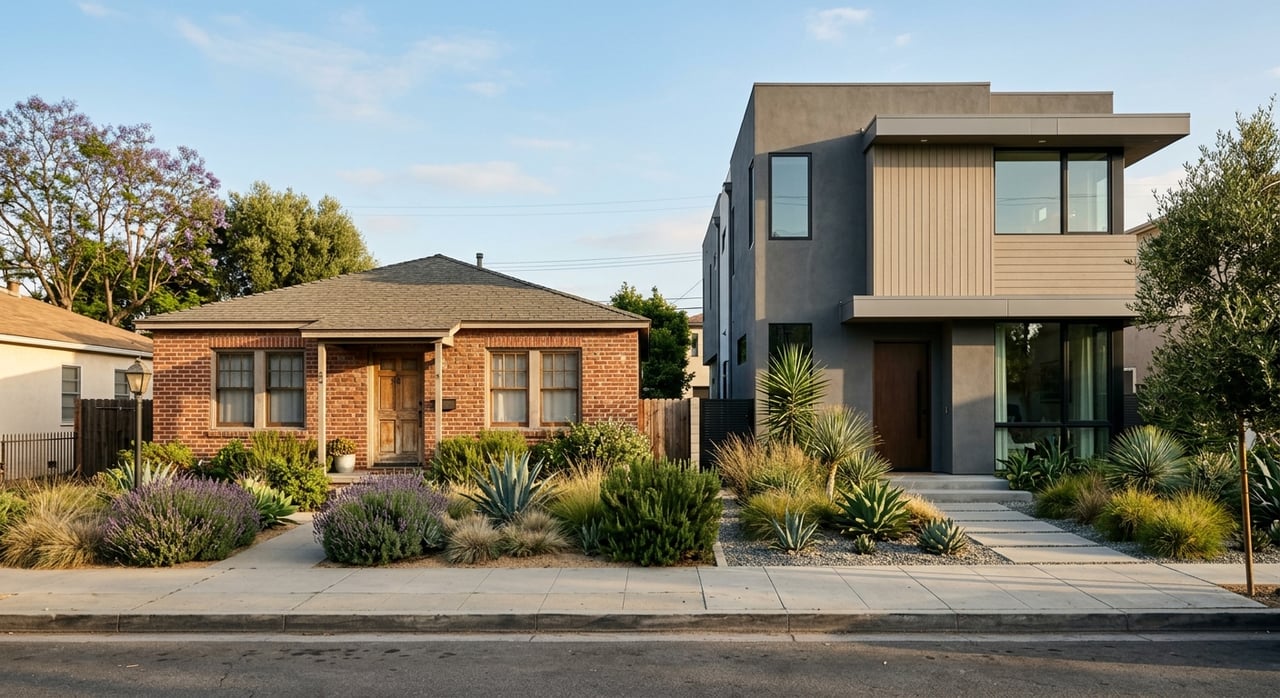
Trying to choose between a newer home and an older one in Longmont? You are not just comparing age. You are comparing different eras of city growth, different construction standards, different maintenance profiles, and often very different day-to-day living experiences. If you understand how Longmont’s housing stock is built and where each type of home tends to fit in the market, you can make a smarter decision with fewer surprises. Let’s dive in.
Longmont Is a Multi-Era Market
Longmont is not a city where all the old homes sit in one pocket and all the new homes sit in another. The city was founded in 1871 as a planned town, then expanded significantly from the 1960s through the 1980s and later. That history created a market where older homes, mid-century homes, and newer construction all exist side by side.
That mix matters when you start touring homes. In Longmont, “older” could mean a home near the original street grid, a mid-century property built decades later, or something in between. “Newer” could mean a detached home, a townhome, a condo, or part of a mixed-use development rather than just a traditional subdivision.
The city’s 2023 Housing Needs Assessment helps frame the market clearly. It says 61% of Longmont housing units were built between 1960 and 1999, which means much of the city falls into a mature middle category rather than one extreme or the other. It also notes that 72% of housing in 2021 consisted of single-family detached and attached homes.
Newer Homes in Longmont
Newer homes often appeal to buyers who want more predictability. In general, they are more likely to reflect current building and energy standards, and they may offer a more turnkey experience in the first few years of ownership. That can be especially attractive if you are relocating, managing a busy schedule, or simply want fewer immediate projects.
Longmont adopted the 2021 International Codes effective January 1, 2022, including the 2021 International Residential Code and the 2021 International Energy Conservation Code. As a practical takeaway, newer homes are more likely to align with more current requirements for insulation, systems, electrical, and safety than older resale homes. That does not make every new home perfect, but it can reduce some near-term uncertainty.
Another local factor is the type of newer inventory entering the market. Longmont’s development pipeline is broad, with units under construction or under review across multifamily, townhomes or condos, single-family homes, and duplexes or triplexes. So if you are shopping newer homes in Longmont, your options may include different layouts, price points, and maintenance responsibilities.
There is also usually a price premium. The city reports that a typical new-construction home sold for $702,500 in 2022, compared with a median single-family sale price of $611,421. That gap does not mean newer is overpriced, but it does mean you should weigh convenience and newer features against your budget and long-term goals.
Pros of Newer Homes
- More likely to reflect current code standards
- Often lower near-term maintenance uncertainty
- May offer more modern layouts and systems
- Can provide a more move-in-ready experience
- May include attached-home options like townhomes and condos
Tradeoffs of Newer Homes
- Often come with a higher purchase price
- May offer less architectural variety than older homes
- In some areas, lot sizes or spacing may feel different from older parts of town
- Newer inventory is not always detached single-family housing
Older Homes in Longmont
Older homes in Longmont tend to appeal to buyers who value character, variety, and a stronger connection to the city’s original development pattern. Because Longmont’s oldest homes are scattered among newer buildings rather than grouped in one single historic area, you can find older properties in a range of settings and styles.
The city identifies two National Historic Districts, Eastside and Westside. Eastside is generally between Fourth and Eighth avenues and Kimbark and Atwood streets, while Westside is between Third and Fifth avenues and Terry and Grant streets. At the same time, Longmont says there are currently no locally designated historic districts, which is an important detail for buyers trying to understand possible restrictions.
That does not mean you should assume there are no preservation considerations. It means you should verify the status of a specific property rather than assume every older home is treated the same way. Age alone does not automatically mean a home is locally landmarked or heavily restricted.
Architecturally, older Longmont homes offer a wide range of styles. The city highlights Queen Anne, Bungalow, Craftsman, Art Deco, Tudor Revival, Colonial Revival, Italianate, Second Empire, Four Square, and several vernacular forms. In real life, that means two older homes with similar square footage can feel completely different in layout, curb appeal, detail, and renovation history.
Pros of Older Homes
- More architectural variety and character
- Stronger ties to Longmont’s original core and historic growth patterns
- Often more unique floor plans, exterior details, and streetscapes
- Can offer a setting that feels distinct from newer development patterns
Tradeoffs of Older Homes
- More variation in condition and renovation quality
- Greater need for system, roof, drainage, and foundation review
- Efficiency may lag behind newer homes unless upgrades have been made
- Floor plans and storage can differ from what many buyers expect today
Maintenance Matters More in Longmont’s Climate
When you compare newer and older homes in Longmont, maintenance should be part of the conversation right away. The city’s code criteria include a 30-inch frost depth, 30 pounds per square foot ground snow load, and local wind design values that reflect real weather demands. Those conditions can expose weak spots in a home over time.
For older homes especially, it makes sense to look carefully at the roof, flashing, windows, drainage, and foundation details. Freeze-thaw cycles and weather exposure can make deferred maintenance more expensive if problems have been ignored. A home with strong upkeep can be a great buy, but a home with hidden wear may require a larger repair budget than you first expected.
This is where a simple “old versus new” label can be misleading. A well-maintained older home may be a better fit than a newer home that stretches your budget too far. The right comparison is not just age. It is age, condition, upgrades, and total cost of ownership.
Efficiency Is Not Just a New-Home Story
Many buyers assume newer homes are efficient and older homes are not. In Longmont, that is too simple. Newer homes usually start closer to current code, but older homes can often narrow the gap with targeted improvements.
Longmont Power & Communications offers local programs that can help residents improve energy performance. The city utility says residential customers pay some of the lowest electric rates in Colorado, and its rate information says customers were paying 29% less than the average Colorado electric rate. It also offers home energy assessments, rebates, free sustainable home consultations, refrigerator recycling, and EV charger rebates.
That is useful if you are considering an older home with good bones but dated systems or insulation. Instead of asking only whether a home is efficient today, ask what upgrades have already been completed and what future improvements are realistic. That approach gives you a more accurate picture of monthly costs and long-term value.
Questions to Ask Before You Buy
If you are comparing newer and older homes in Longmont, focus on questions that reveal the true ownership experience. These questions usually matter more than the label alone.
Ask About Age and Systems
- What year was the home built?
- What major systems have already been replaced?
- How old are the roof, windows, furnace, and other key components?
- Are there signs of deferred maintenance around drainage or the foundation?
Ask About Location Context
- Is the home in or near the Eastside or Westside historic district areas?
- Does the property feel tied to the original grid, a mid-century section of town, or a newer growth area?
- How does the home’s setting affect lot use, parking, or future updates?
Ask About Health and Renovation Issues
- Was the home built before 1978?
- If so, have you received information about known lead-based paint hazards?
- If future renovation work is planned, what precautions may be needed?
For pre-1978 homes, lead-based paint should be part of your due diligence. The EPA says homes built before 1978 are more likely to contain lead-based paint, and buyers of most pre-1978 housing have a right to know about known lead-based paint hazards before signing a contract. If renovation will disturb lead paint, certified lead-safe contractors are required.
Which Type of Home Fits You Best?
If you want lower near-term maintenance uncertainty and a home that is more likely to align with current code standards, a newer home may be the better fit. You may pay more upfront, but the tradeoff can be simplicity, efficiency, and fewer immediate projects. That can be especially valuable if you are balancing work, a move, or a tight timeline.
If you care more about architectural character, neighborhood texture, and a connection to Longmont’s earlier development, an older home may be worth the extra diligence. You may need to look more closely at systems, upgrades, and maintenance history, but you could end up with a home that feels more distinctive and more rooted in place.
In the end, the best choice is not about whether newer homes are good and older homes are risky, or the other way around. It is about matching your budget, maintenance comfort level, design preferences, and long-term plans to the right property. If you want help sorting through those tradeoffs in Longmont, Daniel Hsieh can help you compare options with clear, practical guidance.
FAQs
What makes older homes in Longmont different from newer homes?
- Older homes in Longmont often offer more architectural variety and a stronger connection to the city’s original development, while newer homes are more likely to reflect current code and energy standards and may have fewer near-term maintenance concerns.
Are newer homes in Longmont always single-family houses?
- No. Longmont’s housing pipeline includes multifamily housing, townhomes, condos, duplexes, triplexes, and single-family homes, so newer housing options can come in several forms.
Do older homes in Longmont have historic restrictions?
- Not always. Longmont has two National Historic Districts, Eastside and Westside, but no locally designated historic districts, so you should verify the status of the specific property instead of assuming all older homes have the same rules.
Is buying a newer home in Longmont more expensive?
- Often, yes. The city reports a typical new-construction sale price of $702,500 in 2022, compared with a median single-family sale price of $611,421.
Should buyers of older Longmont homes worry about energy efficiency?
- You should evaluate it carefully, but older homes are not automatically poor performers. Longmont offers utility programs such as home energy assessments, rebates, and consultations that can help improve efficiency over time.
What should buyers check first in an older Longmont home?
- Focus on the year built, major system ages, roof condition, windows, drainage, foundation details, and whether the home was built before 1978, which can raise lead-based paint questions during due diligence.